The Names of God — Hebrew, Greek, and Aramaic Roots, Origins, and Scripture References
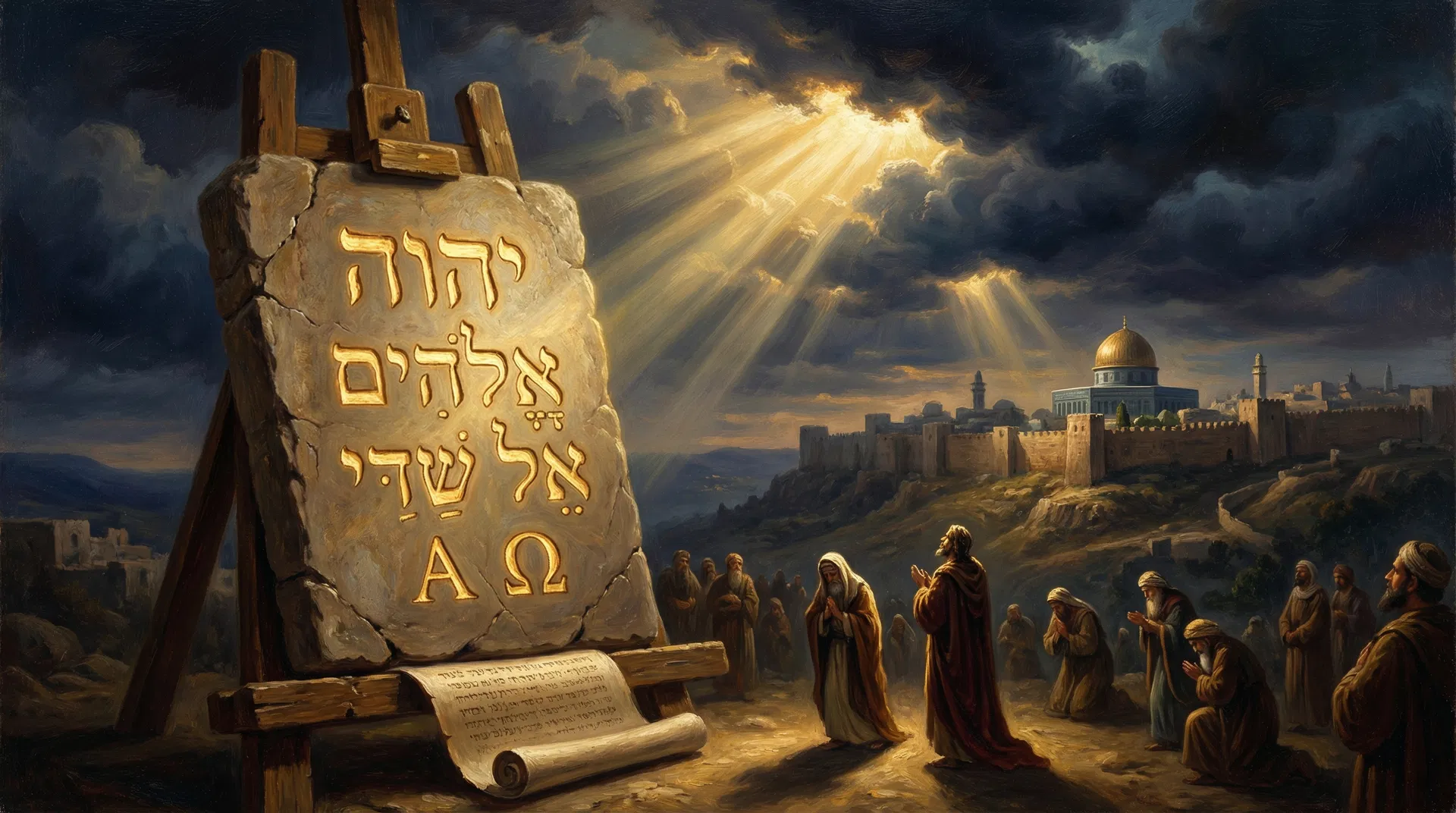
A comprehensive scholarly study of all the major names of God across Hebrew, Aramaic, and Greek — tracing the etymological roots, Semitic cognates, Septuagint renderings, and scriptural references of each name. From YHWH and Elohim to El Shaddai, the Yahweh compounds, the Aramaic Ancient of Days, and the Greek Kyrios, Logos, and Pantokrator, this article examines what each name reveals about God's character and how they find their ultimate fulfilment in Jesus Christ.
Section 1: Introduction — Why Names Matter
In the ancient world, a name was never merely a label. It was an identity, a revelation, a window into the very nature of the one who bore it. To know someone's name was to know something essential about who they were. This principle reaches its highest expression in the names of God — the appellations, titles, and compound designations by which the living God has chosen to reveal Himself to humanity across the centuries of biblical history.
The study of God's names is not an exercise in linguistics alone, though the linguistic dimension is rich and rewarding. It is, at its core, an exercise in theology — in knowing God as He has chosen to be known. As the psalmist declared, "Let them praise the name of the LORD: for his name alone is excellent; his glory is above the earth and heaven" (Psalm 148:13). To study these names is to stand before a multifaceted revelation of the divine character, each name illuminating a different facet of who God is and how He relates to His people.
This article examines the major names of God across three linguistic traditions: Hebrew (the language of the Old Testament), Aramaic (the language of portions of Daniel and Ezra, and the everyday tongue of Jesus), and Greek (the language of the New Testament and the Septuagint). For each name, we trace its etymological roots, its frequency and first occurrence in Scripture, its rendering in the Septuagint (the Greek translation of the Hebrew Bible), and the key passages where it appears. We also attend to the theological significance of each name — what it reveals about God's character and His relationship with His people.
The guiding conviction of this study is that God's names are not arbitrary designations but deliberate acts of self-disclosure. Each name was revealed in a specific historical context, in response to a specific human need, and each carries within it a promise about who God is and what He does. To know these names is to be better equipped to trust the God who bears them.
Section 2: The Hebrew Foundation — El, Eloah, and Elohim
The oldest and most fundamental Hebrew words for God belong to the El family — a cluster of cognate terms that span the entire Semitic language world. The root ʾil or ʾel is attested in Akkadian (ilu), Ugaritic (ʾil), Phoenician (ʾl), and Arabic (ʾilāh, from which the Islamic Allah derives). The Proto-Semitic root carries the sense of power, strength, and might — the divine as the supremely powerful one.
El (אֵל, H410) appears approximately 250 times in the Hebrew Bible, most often in poetic texts and in compound names. It is the simplest and most ancient designation for deity in the Semitic world. In the Septuagint it is rendered theos (θεός), the standard Greek word for God. Key passages include Genesis 14:18-22, where Melchizedek is described as "priest of El Elyon" (God Most High); Numbers 23:19, "God is not a man, that He should lie"; and Isaiah 40:28, "The everlasting God, El, the LORD, the Creator of the ends of the earth."
Eloah (אֱלוֹהַּ, H433) is the singular form of the more common Elohim. It appears approximately 57 times in the Hebrew Bible, with 41 of those occurrences in the Book of Job — a distribution that suggests its particular association with the wisdom literature tradition and with the contemplation of God in His transcendence. The Septuagint renders it theos. Key passages include Deuteronomy 32:15, Habakkuk 3:3, and throughout the Book of Job.
Elohim (אֱלֹהִים, H430) is the most common Hebrew word for God, appearing over 2,500 times in the Old Testament. Its grammatical form is plural — a feature that has generated considerable theological discussion. The traditional explanation is that this is a "plural of majesty" or "plural of fullness," expressing the greatness and completeness of God's being rather than a numerical plurality. Yet Christian theologians have also seen in this plural form a hint of the Trinitarian nature of God, particularly in light of the plural pronouns used in creation: "Let us make man in our image" (Genesis 1:26). The Septuagint renders Elohim as theos. Its first occurrence is the very first verse of the Bible: "In the beginning Elohim created the heavens and the earth" (Genesis 1:1). The name emphasises God as Creator, Judge, and the supreme Power over all existence.
| Name | Hebrew | Strong's | Root Meaning | Frequency | First Use |
|---|---|---|---|---|---|
| El | אֵל | H410 | Power, might | ~250 | Gen 14:18 |
| Eloah | אֱלוֹהַּ | H433 | God (singular) | ~57 | Deut 32:15 |
| Elohim | אֱלֹהִים | H430 | God (plural of majesty) | 2,500+ | Gen 1:1 |
Section 3: The Covenant Name — YHWH (Yahweh)
No name in all of Scripture is more significant than the Tetragrammaton — the four Hebrew letters Yud-Hay-Vav-Hay (יהוה), transliterated as YHWH and traditionally vocalised as Yahweh or Jehovah. This name appears 6,828 times in the Old Testament — more than any other divine designation — and it is the name by which God chose to reveal His deepest identity to His covenant people.
The etymology of YHWH is rooted in the Hebrew verb hayah (הָיָה), meaning "to be," "to exist," or "to become." God Himself unpacks the meaning of this name in the pivotal exchange with Moses at the burning bush: "I AM WHO I AM" (Ehyeh Asher Ehyeh, אֶהְיֶה אֲשֶׁר אֶהְיֶה) — "Say this to the people of Israel: 'I AM has sent me to you'" (Exodus 3:14). The name YHWH thus encodes the divine self-existence, the eternal present tense of God's being. He is not merely the God who was or who will be, but the God who is — the One whose existence is underived, uncaused, and unending.
The Septuagint rendered YHWH as Kyrios (κύριος, "Lord"), a decision with enormous theological consequences. Because the New Testament authors wrote in Greek and used the Septuagint as their Bible, the Greek word Kyrios became the bridge between the Old Testament YHWH and the New Testament proclamation that "Jesus is Lord" — a confession that, in its original context, was a claim that Jesus shares in the divine identity of YHWH (Romans 10:9-13; Philippians 2:9-11; Acts 2:36).
YHWH is first used in Genesis 2:4, but God did not reveal Himself as YHWH until Exodus 3. The distinction is theologically important: He had appeared to the patriarchs as El Shaddai (Exodus 6:3), but the full covenant significance of the name YHWH was disclosed only in the context of the Exodus — the great redemptive event that would define Israel's identity for all time. YHWH is, above all, a covenant name: it is the name of the God who makes promises and keeps them, who enters into binding relationship with His people, and who remains faithful even when they are faithless (Jeremiah 31:31-34; 2 Timothy 2:13).
The Jewish tradition of not pronouncing the divine name — substituting Adonai or Hashem ("the Name") — developed in the post-exilic period, though the Levites had pronounced it in blessings (Numbers 6:24-27) and the Psalms confirm it was declared and praised in worship (Psalm 22:22; 100:4). The non-pronunciation, while motivated by reverence, was not itself a biblical command; the commandment in Exodus 20:7 prohibits taking the name in vain (using it lightly or falsely), not pronouncing it at all.
Section 4: Adonai and the Language of Lordship
Adonai (אֲדֹנָי, H136) is the verbal parallel to YHWH in terms of frequency and importance. It appears 434 times in the Old Testament, with particularly heavy concentration in Isaiah and Ezekiel (200 occurrences in Ezekiel alone). Its first use is in Genesis 15:2, where Abraham addresses God: "O Lord GOD (Adonai YHWH), what will you give me?"
The root is adon (אָדוֹן), meaning "lord," "master," or "owner." The singular adon is used 215 times to refer to human masters and lords. The plural form Adonai — literally "my lords" — is used exclusively of God, functioning as a plural of majesty that intensifies the sense of supreme authority. The Septuagint renders Adonai as Kyrios, the same word used for YHWH, creating a deliberate theological identification between the two names.
The theological weight of Adonai lies in its emphasis on God's sovereign ownership and authority. To call God Adonai is to acknowledge that He is the supreme Master, that all things belong to Him, and that His authority over creation and over His people is absolute. It is the language of covenant submission — the recognition that the one who calls upon God as Adonai is placing themselves under His lordship.
Section 5: The El Compounds — God Revealed in Action
The compound names formed by combining El with descriptive terms represent some of the most theologically rich designations in the entire Bible. Each was revealed in a specific historical moment of divine encounter, and each carries within it a testimony to what God did and who He proved Himself to be.
El Shaddai (אֵל שַׁדַּי, H7706) — "God Almighty" or "The All-Sufficient God." The etymology of Shaddai is debated among scholars. The most common Hebrew derivation connects it to shad (שַׁד), meaning "breast," suggesting a God who nourishes and sustains His people as a mother nourishes her child. An alternative derivation connects it to the Akkadian šadu, meaning "mountain," suggesting strength and immovability. Both meanings are theologically apt: God as the One who both sustains and is unshakeable. The Septuagint renders Shaddai as Pantokratōr (παντοκράτωρ), "Almighty." El Shaddai was the name by which God revealed Himself to the patriarchs — Abraham (Genesis 17:1), Isaac (Genesis 28:3), and Jacob (Genesis 35:11) — before revealing the covenant name YHWH to Moses (Exodus 6:3). It appears 7 times as El Shaddai and 48 times as Shaddai alone, predominantly in Job.
El Elyon (אֵל עֶלְיוֹן, H5945) — "The Most High God." Elyon derives from the verb 'alah (עָלָה), "to go up, ascend," and means "highest" or "uppermost." The compound El Elyon expresses God's supreme sovereignty over all other powers — earthly and heavenly. It appears 28 times in the Old Testament, 19 times in the Psalms. Its first use is in Genesis 14:18, where Melchizedek, the mysterious priest-king of Salem, is described as "priest of God Most High" — a passage that the Letter to the Hebrews (7:1-17) interprets as a type of Christ's eternal priesthood. The Septuagint renders it Ho Theos Ho Hupsistos (ὁ θεὸς ὁ ὕψιστος). In the New Testament, the Greek Hupsistos (ὕψιστος, H5310) preserves this title, appearing in Luke 1:32, 35, 76 in the birth narrative of Jesus.
El Olam (אֵל עוֹלָם, H5769) — "The Everlasting God." Olam derives from a root meaning "to be hidden" or "concealed," from which it came to mean "eternity" — the hidden, immeasurable expanse of time. El Olam thus means "The God of Eternity" or "The God of the Ages." First used in Genesis 21:33, where Abraham planted a tamarisk tree at Beersheba and called on the name of YHWH El Olam. The Septuagint renders it Ho Theos Ho Aiōnios (ὁ θεὸς ὁ αἰώνιος). Key passages include Isaiah 26:4, Isaiah 40:28, and Romans 16:26 ("the eternal God").
El Roi (אֵל רֳאִי, H7210) — "The God Who Sees Me." Roi derives from ra'ah (רָאָה), "to see, look, observe." This name is unique in all of Scripture: it is the only divine name given by a human being to God. Hagar, the Egyptian slave of Sarah, fleeing mistreatment in the wilderness, encountered the angel of the LORD and received a promise. Her response was to name God: "You are El Roi" — "Truly here I have seen him who looks after me" (Genesis 16:13). The name emphasises God's omniscience and His particular care for the marginalised and overlooked. It is a name born in the wilderness, given by a woman who had no social standing, and it stands as a permanent testimony that God sees those whom human society ignores.
El Gibhor (אֵל גִּבּוֹר, H1368) — "Mighty God." Gibhor derives from gabar (גָּבַר), "to be strong, prevail, be mighty." This name appears as one of the four messianic titles in Isaiah 9:6 — "For to us a child is born, to us a son is given; and the government shall be upon his shoulder, and his name shall be called Wonderful Counselor, Mighty God (El Gibhor), Everlasting Father, Prince of Peace." The application of the divine title El Gibhor to the coming messianic king is one of the most explicit Christological passages in the Old Testament. It also appears in Isaiah 10:21 and Jeremiah 32:18.
| Name | Hebrew | Meaning | First Use | Key Passages |
|---|---|---|---|---|
| El Shaddai | אֵל שַׁדַּי | All-Sufficient/Almighty | Gen 17:1 | Gen 17:1; 28:3; 35:11; Exod 6:3; Job 5:17 |
| El Elyon | אֵל עֶלְיוֹן | Most High God | Gen 14:18 | Gen 14:18-22; Ps 57:2; 78:35; Dan 7:18 |
| El Olam | אֵל עוֹלָם | Everlasting God | Gen 21:33 | Gen 21:33; Isa 26:4; 40:28; Rom 16:26 |
| El Roi | אֵל רֳאִי | The God Who Sees | Gen 16:13 | Gen 16:13-14; Ps 139:1-12; Prov 15:3 |
| El Gibhor | אֵל גִּבּוֹר | Mighty God | Isa 9:6 | Isa 9:6; 10:21; Jer 32:18 |
Section 6: The Yahweh Compounds — God Revealed in Covenant History
The compound names formed by combining YHWH with descriptive terms are among the most beloved and theologically significant designations in the Bible. Each was given in a specific historical moment of divine intervention, and each functions as a living testimony to what God did and who He proved Himself to be. These names are not merely theological abstractions; they are memorial markers — altars of remembrance — that preserve the memory of God's faithfulness across generations.
Yahweh Jireh (יְהוָה יִרְאֶה, H3070) — "The LORD Will Provide." Jireh derives from ra'ah (רָאָה), "to see, foresee, provide" — the same root as El Roi. The name was given by Abraham on Mount Moriah after God provided a ram as a substitute for Isaac: "So Abraham called the name of that place, 'The LORD will provide'; as it is said to this day, 'On the mount of the LORD it shall be provided'" (Genesis 22:14). The Septuagint renders it Kyrios Eiden — "The Lord has seen." The name encodes the theological truth that God's provision is always preceded by His seeing — He sees the need before we articulate it. The New Testament fulfilment is Christ Himself, the Lamb of God provided by the Father on the same mountain range where Abraham's ram was provided (John 1:29; Romans 8:32).
Yahweh Rapha (יְהוָה רֹפְאֶךָ, H7495) — "The LORD Who Heals." Rapha (רָפָא) means "to heal, restore, make healthful." The name was revealed at Marah, where bitter water was made sweet: "I am the LORD, your healer" (Exodus 15:26). The Septuagint renders it Kyrios Ho Iōmenos Se — "The Lord your healer." The healing encompassed by this name is comprehensive — physical (Psalm 103:3), emotional (Psalm 147:3), national (Jeremiah 30:17), and spiritual (Isaiah 53:5). The New Testament fulfilment is seen in Jesus' healing ministry (Matthew 4:23-24) and in the atonement, where "by his wounds you have been healed" (1 Peter 2:24, citing Isaiah 53:5).
Yahweh Nissi (יְהוָה נִסִּי, H3071) — "The LORD My Banner." Nissi derives from nes (נֵס), meaning "banner," "standard," or "pole." After Israel defeated the Amalekites, Moses built an altar and named it Yahweh Nissi: "The LORD is my banner" (Exodus 17:15). In ancient warfare, a banner or standard was planted at the front of the battle line as a rallying point — a visible symbol of the army's identity and a source of courage. God is Israel's banner: the one around whom they rally, under whose authority they fight, and in whose name they find courage. The Septuagint renders it Kyrios Kataphugē Mou — "The Lord is my refuge." The New Testament connection is found in John 3:14-15, where Jesus draws on the image of Moses lifting up the serpent on a pole (nes) as a type of His own lifting up on the cross.
Yahweh Shalom (יְהוָה שָׁלוֹם, H3073) — "The LORD Is Peace." Shalom (שָׁלוֹם) derives from shalam (שָׁלֵם), "to be complete, whole, sound." It encompasses far more than the absence of conflict — it is the positive state of wholeness, completeness, and well-being in every dimension of life. The name was given by Gideon, who had just received a divine assurance that he would not die despite having seen the angel of the LORD face to face: "Then Gideon built an altar there to the LORD and called it, The LORD Is Peace" (Judges 6:24). The Septuagint renders it Eirēnē Kyriou — "Peace of the Lord." The New Testament fulfilment is found in Christ, who is described as "our peace" (Ephesians 2:14) and who gives "the peace of God, which surpasses all understanding" (Philippians 4:7).
Yahweh Raah (יְהוָה רֹעִי, H7462) — "The LORD My Shepherd." Raah (רָעָה) means "to shepherd, feed, tend, pasture." The name is most fully expressed in Psalm 23:1 — "The LORD is my shepherd; I shall not want." The Septuagint renders it Kyrios Poimainei Me — "The Lord shepherds me." Significantly, the Hebrew root ra'ah is related to rea' (רֵעַ), meaning "friend" or "companion" — suggesting that the shepherd-God is not merely a provider and protector but an intimate companion. The New Testament fulfilment is explicit: Jesus declares "I am the good shepherd" (John 10:11), applying the Yahweh Raah title to Himself.
Yahweh Tsidkenu (יְהוָה צִדְקֵנוּ, H3072) — "The LORD Our Righteousness." Tsidkenu derives from tsedek (צֶדֶק), "to be straight, right, just." The name appears in Jeremiah 23:6 as a messianic prophecy: "In his days Judah will be saved, and Israel will dwell securely. And this is the name by which he will be called: 'The LORD is our righteousness.'" It appears again in Jeremiah 33:16. The New Testament fulfilment is found in 1 Corinthians 1:30, where Paul declares that Christ "became to us wisdom from God, righteousness and sanctification and redemption," and in 2 Corinthians 5:21, where "he made him to be sin who knew no sin, so that in him we might become the righteousness of God."
Yahweh Shammah (יְהוָה שָׁמָּה, H3074) — "The LORD Is There." Shammah derives from sham (שָׁם), meaning "there, in that place." The name appears only once in the Old Testament — as the final name given to the restored Jerusalem in Ezekiel's great vision: "And the name of the city from that time on shall be, The LORD Is There" (Ezekiel 48:35). It is an eschatological name — a promise about the ultimate future. The New Testament fulfilment is found in Revelation 21:3 — "Behold, the dwelling place of God is with man. He will dwell with them, and they will be his people, and God himself will be with them as their God" — and in Jesus' promise, "I am with you always, to the end of the age" (Matthew 28:20).
Yahweh Sabaoth (יְהוָה צְבָאוֹת, H6635) — "The LORD of Hosts." Sabaoth (צְבָאוֹת) derives from tsaba (צָבָא), "to wage war, go to battle," and means "armies" or "hosts." The compound Yahweh Sabaoth — "The LORD of Armies" — appears over 285 times in the Old Testament, most frequently in Isaiah and Jeremiah. Its first use is in 1 Samuel 1:3. The name emphasises God's supreme command over all armies — angelic, celestial, and earthly. The Septuagint renders it both as Kyrios Sabaōth (a transliteration) and as Kyrios Pantokratōr (κύριος παντοκράτωρ), "Lord Almighty." The New Testament preserves the transliteration in Romans 9:29 (citing Isaiah 1:9) and James 5:4.
Yahweh Mekoddishkem (יְהוָה מְקַדִּשְׁכֶם, H6942) — "The LORD Who Sanctifies You." Mekoddishkem derives from qadash (קָדַשׁ), "to be holy, set apart, consecrate." The name appears in Exodus 31:13 and Leviticus 20:8 in the context of Sabbath observance: "You are to speak to the people of Israel and say, 'Above all you shall keep my Sabbaths... that you may know that I, the LORD, sanctify you.'" The theological point is crucial: holiness is not a human achievement but a divine gift. God does not command His people to sanctify themselves and then wait to see if they succeed; He declares Himself to be the one who sanctifies them. The New Testament fulfilment is found in 1 Thessalonians 5:23 and Hebrews 13:12.
| Name | Meaning | Context of Revelation | Key NT Fulfilment |
|---|---|---|---|
| Yahweh Jireh | The LORD Will Provide | Abraham/Isaac on Moriah (Gen 22:14) | Christ as the Lamb of God (John 1:29) |
| Yahweh Rapha | The LORD Who Heals | Bitter waters at Marah (Exod 15:26) | Jesus' healing ministry; Isa 53:5 (1 Pet 2:24) |
| Yahweh Nissi | The LORD My Banner | Defeat of Amalekites (Exod 17:15) | Christ lifted up on the cross (John 3:14-15) |
| Yahweh Shalom | The LORD Is Peace | Gideon's altar (Judg 6:24) | Christ our peace (Eph 2:14; Phil 4:7) |
| Yahweh Raah | The LORD My Shepherd | Psalm 23 | "I am the good shepherd" (John 10:11) |
| Yahweh Tsidkenu | The LORD Our Righteousness | Messianic prophecy (Jer 23:6) | Christ our righteousness (1 Cor 1:30; 2 Cor 5:21) |
| Yahweh Shammah | The LORD Is There | Restored Jerusalem (Ezek 48:35) | God dwells with man (Rev 21:3; Matt 28:20) |
| Yahweh Sabaoth | The LORD of Hosts | Hannah's prayer (1 Sam 1:3) | Lord Almighty (Rom 9:29; Jas 5:4) |
| Yahweh Mekoddishkem | The LORD Who Sanctifies | Sabbath command (Exod 31:13) | God sanctifies (1 Thess 5:23; Heb 13:12) |
Section 7: Other Significant Hebrew Titles
Beyond the primary names and compound designations, the Old Testament employs a rich array of titles and metaphors that illuminate different dimensions of God's character.
Qanna (קַנָּא, H7067) — "Jealous" or "Zealous." This name appears six times in the Old Testament and is first used in Exodus 20:5, in the context of the second commandment: "I the LORD your God am a jealous God." The root qana (קָנָא) carries the sense of a fierce, exclusive love — the kind of love that cannot tolerate a rival. God's jealousy is not the petty envy of one who fears being displaced; it is the righteous, protective love of a husband for his covenant people, a love that refuses to share its object with idols. The Septuagint renders it Zēlōtēs (ζηλωτής). Key passages include Exodus 34:14, Deuteronomy 4:24, and Joshua 24:19.
Tsur (צוּר) — "Rock." This metaphorical title appears throughout the Psalms and the Song of Moses (Deuteronomy 32). It emphasises God's stability, reliability, and strength as a place of refuge. Key passages include Deuteronomy 32:4 ("The Rock, his work is perfect"), Psalm 18:2 ("The LORD is my rock and my fortress"), Psalm 19:14, and Isaiah 26:4. The New Testament applies this title to Christ in 1 Corinthians 10:4: "and the Rock was Christ."
Qedosh Yisrael (קְדוֹשׁ יִשְׂרָאֵל) — "The Holy One of Israel." This title appears 30 times in Isaiah alone and emphasises God's absolute moral purity and His unique, set-apart nature. Isaiah's foundational vision (Isaiah 6:3) — "Holy, holy, holy is the LORD of hosts" — establishes holiness as the defining attribute of God. The triple repetition (qadosh, qadosh, qadosh) is the only instance in the Hebrew Bible where an attribute of God is repeated three times, suggesting a superlative emphasis beyond what any grammatical construction could achieve. Key passages: Isaiah 1:4; 6:3; 12:6; 41:14; 43:3; 54:5.
Go'el (גֹּאֵל) — "Redeemer" or "Kinsman-Redeemer." The root ga'al (גָּאַל) refers to the legal institution of the go'el — the nearest male relative who had both the right and the obligation to redeem a family member from slavery, poverty, or death. God applies this title to Himself as the one who acts as Israel's nearest kinsman, buying them back from bondage. Key passages include Job 19:25 ("I know that my Redeemer lives"), Isaiah 41:14; 43:14; 44:6; 47:4; and 54:5. The Book of Ruth, in which Boaz acts as kinsman-redeemer for Naomi and Ruth, is a sustained typological portrait of God as Go'el.
Abir Yaakov (אֲבִיר יַעֲקֹב) — "The Mighty One of Jacob." Abir (אַבִּיר) means "strong, mighty, valiant" — the champion or hero. This title emphasises God's power as the particular protector of Jacob's descendants. Key passages: Genesis 49:24; Isaiah 1:24; Isaiah 49:26; Psalm 132:2, 5.
Section 8: Aramaic Names — The Language of Daniel and Jesus
Aramaic was the lingua franca of the ancient Near East from approximately the 8th century BCE onward, and portions of the Old Testament — specifically parts of Ezra (4:8–6:18; 7:12-26) and Daniel (2:4–7:28) — were written in Aramaic rather than Hebrew. Aramaic was also the everyday spoken language of Jesus and His disciples in first-century Palestine.
Elah (אֱלָהּ / אֱלָהָא) is the Aramaic equivalent of the Hebrew Eloah — the singular word for God. It appears throughout the Aramaic sections of Ezra and Daniel. Key passages: Ezra 5:1; Daniel 2:20 ("Blessed be the name of God forever and ever"); Daniel 3:17; Daniel 6:20.
Atiq Yomin (עַתִּיק יוֹמִין) — "Ancient of Days." This majestic Aramaic title appears three times in Daniel 7 (verses 9, 13, and 22) in the context of Daniel's great apocalyptic vision. Atiq means "ancient, old, venerable" and yomin means "days." The title presents God as the eternal judge, seated on a blazing throne, whose garment is white as snow and whose hair is like pure wool — images of absolute purity and eternal wisdom. The Septuagint renders it Palaios Hēmerōn (παλαιὸς ἡμερῶν). This title is significant for Christology: in Daniel 7:13-14, "one like a son of man" comes before the Ancient of Days and receives everlasting dominion — a passage Jesus explicitly applied to Himself (Matthew 26:64; Mark 14:62).
Mārē (מָרֵא) — "Lord" (Aramaic). This Aramaic word for "lord" or "master" appears in Daniel 2:47 and is preserved in the New Testament in the Aramaic prayer Maranatha (1 Corinthians 16:22), which means "Our Lord, come!" The fact that the earliest Christians used this Aramaic title for Jesus — applying to Him the same term used for God in Daniel — is powerful evidence that the first disciples worshipped Jesus as divine Lord from the very beginning of the Christian movement.
Abba (אַבָּא) — "Father" (Aramaic). While Abba is not a name for God in the Old Testament, it is the most intimate divine address in the New Testament. Abba is the Aramaic emphatic form of ab (father), meaning "the father" or "my father." It was the term used by children to address their fathers in everyday speech. Jesus used Abba in His prayer in Gethsemane (Mark 14:36) — an address of extraordinary intimacy that reflects His unique filial relationship with God. The New Testament then extends this privilege to believers: "And because you are sons, God has sent the Spirit of his Son into our hearts, crying, 'Abba! Father!'" (Galatians 4:6; Romans 8:15). The Aramaic word was so significant that it was preserved untranslated in the Greek New Testament, always paired with the Greek ho Pater ("the Father").
Section 9: Greek Names in the New Testament
The New Testament was written in Koine Greek — the common Greek dialect of the Hellenistic world — and its divine names reflect both the continuity of Old Testament revelation and the new disclosure of God's identity in Jesus Christ.
Theos (θεός, G2316) is the standard Greek word for God, appearing 1,317 times in the New Testament. Its Proto-Indo-European root dhes- carries the sense of the divine or sacred, and it is cognate with Latin deus and Sanskrit deva. In the Septuagint, theos translates both Elohim and El. In the New Testament, it refers almost exclusively to the God of Israel — the Father — though it is also applied to Jesus in John 1:1 ("the Word was God"), John 20:28 (Thomas's confession, "My Lord and my God!"), and Titus 2:13 ("our great God and Savior Jesus Christ").
Kyrios (κύριος, G2962) — "Lord." This is the most theologically loaded title in the New Testament, appearing 717 times. Its Greek root kyros means "authority" or "power," and kyrios designates one who has legitimate authority over others. In the Septuagint, Kyrios was used to translate YHWH (6,828 times) — a decision that made it the primary bridge between the Old Testament divine name and the New Testament. When the New Testament authors confess "Jesus is Lord" (Kyrios Iēsous), they are making the astonishing claim that Jesus shares in the divine identity of YHWH. The basic Christian confession — "Jesus is Lord" — was simultaneously a theological statement (Jesus is YHWH) and a political one (Caesar is not). Key passages: Acts 2:36; John 20:28; Philippians 2:9-11; Romans 10:9-13.
Pantokrator (παντοκράτωρ, G3841) — "Almighty" or "All-Ruling." The compound pan (all) + kratein (to rule, have power) = "The One who rules over all." This title appears 10 times in the New Testament — 9 times in Revelation and once in 2 Corinthians 6:18 (citing 2 Samuel 7:8). In the Septuagint, it was used to translate both YHWH Sabaoth and El Shaddai. In Revelation, it is the dominant divine title, emphasising God's absolute sovereignty over all creation and all history: "Holy, holy, holy, is the Lord God Almighty (Pantokrator), who was and is and is to come!" (Revelation 4:8).
Logos (λόγος, G3056) — "The Word." The Greek word logos carries an extraordinary range of meaning: "word," "reason," "rational principle," "discourse." In Greek philosophy, particularly in the Stoic tradition, the Logos was the rational principle that governed and permeated the universe. In Jewish thought, particularly in the writings of Philo of Alexandria, the Logos was the divine intermediary between God and creation. John's Gospel opens with a deliberate appropriation and transformation of this concept: "In the beginning was the Word (Logos), and the Word was with God, and the Word was God" (John 1:1). By identifying Jesus as the Logos, John is claiming that the rational principle underlying all of reality is not an abstract force but a personal being — and that this being became flesh and dwelt among us (John 1:14). The title Logos also appears in 1 John 1:1 and Revelation 19:13.
Pater (πατήρ, G3962) — "Father." Jesus' most characteristic way of addressing and speaking about God was as "Father" (Pater). The Proto-Indo-European root pəter is found across the Indo-European language family (Latin pater, Sanskrit pitṛ, English father). In the New Testament, God is called Father 414 times. Jesus' use of Abba (the Aramaic form) in prayer was revolutionary — it expressed an intimacy with God that had no parallel in the Judaism of His day. The Lord's Prayer begins with "Our Father" (Matthew 6:9), and Jesus' teaching consistently emphasises the fatherly character of God — His provision (Matthew 6:26-33), His forgiveness (Luke 15:11-32), and His love (John 3:16; 1 John 3:1).
Soter (σωτήρ, G4990) — "Savior." The root sōzō (σῴζω) means "to save, rescue, deliver, preserve." Soter appears 24 times in the New Testament and is applied to both God the Father (1 Timothy 1:1; 2:3; Titus 1:3) and Jesus (Luke 2:11; John 4:42; Acts 5:31; Philippians 3:20). In the Greco-Roman world, soter was a title applied to emperors, generals, and gods who were believed to have delivered their people from danger. The New Testament's application of this title to Jesus is a deliberate counter-claim: the true Savior of humanity is not Caesar but Christ.
Ego Eimi (ἐγώ εἰμι) — "I AM." This is not a name in the strict sense but a divine self-declaration that echoes the Hebrew Ehyeh Asher Ehyeh of Exodus 3:14. Jesus uses the absolute ego eimi ("I AM") in John 8:58 — "Before Abraham was, I AM" — in a context that caused His hearers to take up stones to stone Him, recognising the divine claim. John's Gospel also records seven "I AM" statements with predicates, each of which applies a divine attribute to Jesus: "I am the bread of life" (6:35); "I am the light of the world" (8:12); "I am the door" (10:9); "I am the good shepherd" (10:11); "I am the resurrection and the life" (11:25); "I am the way, and the truth, and the life" (14:6); "I am the true vine" (15:1). In Revelation, the risen Christ declares "I am the Alpha and the Omega, the first and the last, the beginning and the end" (22:13) — a title that in Revelation 1:8 is applied to God the Father, confirming the full deity of Christ.
Alpha kai Omega (Ἄλφα καὶ Ὦ) — "Alpha and Omega." The first and last letters of the Greek alphabet, used to express absolute completeness and the encompassing of all things. The title appears three times in Revelation (1:8; 21:6; 22:13) and is the Greek equivalent of the Hebrew Aleph and Tav — the first and last letters of the Hebrew alphabet. It expresses God's sovereignty over all of history: He is the origin of all things and their ultimate destination, the One in whom all of creation finds its beginning and its end.
| Greek Name | Transliteration | Meaning | Frequency | Key Passages |
|---|---|---|---|---|
| Θεός | Theos | God | 1,317 | John 1:1; 20:28; Titus 2:13 |
| Κύριος | Kyrios | Lord | 717 | Acts 2:36; Phil 2:9-11; Rom 10:9-13 |
| Παντοκράτωρ | Pantokrator | Almighty | 10 | 2 Cor 6:18; Rev 1:8; 4:8; 19:6 |
| Λόγος | Logos | The Word | Multiple | John 1:1-14; 1 John 1:1; Rev 19:13 |
| Πατήρ | Pater | Father | 414 | Matt 6:9; John 14:6-9; 1 John 3:1 |
| Σωτήρ | Soter | Savior | 24 | Luke 2:11; John 4:42; Phil 3:20 |
| Ἐγώ εἰμι | Ego Eimi | I AM | Multiple | John 8:58; 6:35; 10:11; 14:6 |
| Ἄλφα καὶ Ὦ | Alpha kai Omega | First and Last | 3 | Rev 1:8; 21:6; 22:13 |
Section 10: The Thirteen Attributes and the Mosaic Revelation
One of the most concentrated and theologically significant passages in the entire Old Testament is Exodus 34:6-7, in which God proclaims His own name to Moses after the incident of the golden calf. This passage — known in Jewish tradition as the Thirteen Attributes of Mercy (Shelosh-Esreh Middot) — is the most explicit divine self-description in the Hebrew Bible, and it became the foundational text for Jewish and Christian understandings of God's character.
"The LORD, the LORD, a God merciful and gracious, slow to anger, and abounding in steadfast love and faithfulness, keeping steadfast love for thousands, forgiving iniquity and transgression and sin, but who will by no means clear the guilty, visiting the iniquity of the fathers on the children and the children's children, to the third and the fourth generation." (Exodus 34:6-7)
The passage opens with the double repetition of YHWH — a feature that Jewish commentators have interpreted as expressing both God's mercy before sin and God's mercy after sin. The attributes that follow are:
Rachum (רַחוּם) — "Compassionate." From the root rechem (רֶחֶם), "womb" — the deep, visceral compassion of a mother for her child (see the companion study on Rechem in this series).
Channun (חַנּוּן) — "Gracious." From chanan (חָנַן), "to be gracious, show favour" — grace given freely, without merit.
Erech Apayim (אֶרֶךְ אַפַּיִם) — "Slow to anger." Literally "long of nostrils" — the image is of a person who breathes slowly and deliberately rather than flaring their nostrils in immediate rage.
Rav Chesed (רַב חֶסֶד) — "Abounding in steadfast love." Chesed (חֶסֶד) is the great covenant word for God's loyal, faithful, enduring love — a love that is bound by covenant commitment and cannot be broken.
Emet (אֱמֶת) — "Faithfulness" or "Truth." From the root aman (אָמַן), from which we get Amen — the sense of that which is firm, reliable, and trustworthy.
These five attributes — compassion, grace, patience, steadfast love, and faithfulness — form the theological core of the Old Testament's understanding of God's character. They are cited or alluded to in Nehemiah 9:17, Psalm 86:15, Psalm 103:8, Joel 2:13, Jonah 4:2, and Micah 7:18-20 — a remarkable distribution that shows how deeply this passage shaped Israel's theological vocabulary.
Section 11: Messianic Names — The Names Fulfilled in Christ
The Old Testament contains a cluster of names and titles that are explicitly prophetic — designations that point forward to the coming Messiah and find their fulfilment in Jesus of Nazareth. These names form a bridge between the two Testaments and demonstrate the unity of God's self-revelation across the centuries.
Immanuel (עִמָּנוּ אֵל) — "God With Us." The compound of im (with) + anu (us) + El (God). First prophesied in Isaiah 7:14 — "Therefore the Lord himself will give you a sign. Behold, the virgin shall conceive and bear a son, and shall call his name Immanuel" — and explicitly fulfilled in Matthew 1:23: "Behold, the virgin shall conceive and bear a son, and they shall call his name Immanuel (which means, God with us)." This name is the theological summary of the Incarnation: in Jesus, God has come to dwell with His people in the most intimate way possible.
The Four Names of Isaiah 9:6 — The messianic prophecy of Isaiah 9:6 contains four compound names that together describe the character of the coming king:
Pele Yoets (פֶּלֶא יוֹעֵץ) — "Wonderful Counselor." Pele means "wonder, miracle" (the same root as the wonders of the Exodus); ya'ats means "to counsel, advise." The coming king will be a miraculous counselor — one whose wisdom is not merely human but divine.
El Gibhor (אֵל גִּבּוֹר) — "Mighty God." As noted in Section 5, this is an unambiguous application of a divine title to the messianic king — one of the clearest Old Testament affirmations of the deity of the Messiah.
Abi Ad (אֲבִי עַד) — "Everlasting Father." Ab means "father"; ad means "eternity, forever." The Messiah will be a father to his people in the sense of a provider, protector, and source of life — and this fatherhood will be eternal.
Sar Shalom (שַׂר שָׁלוֹם) — "Prince of Peace." Sar means "prince, ruler, chief"; shalom means "peace, wholeness." The Messiah will be the one who establishes the ultimate shalom — the comprehensive well-being and wholeness of God's people and creation. The New Testament identifies Jesus as the fulfilment of this title in Ephesians 2:14 ("he himself is our peace") and John 14:27 ("Peace I leave with you; my peace I give to you").
Section 12: Theological Synthesis — What the Names Reveal Together
The names of God, taken together, constitute a comprehensive portrait of the divine character. They are not isolated labels but facets of a single, coherent self-revelation. Several theological principles emerge from a survey of these names.
Progressive Revelation. God does not disclose all of His names at once. He reveals Himself progressively, in response to the specific needs and circumstances of His people. The patriarchs knew Him as El Shaddai; Moses learned His covenant name YHWH; the prophets explored the compound names; and the New Testament reveals the fullness of His identity as Father, Son, and Holy Spirit (Matthew 28:19). Each stage of revelation builds on the previous one without contradicting it.
Names as Testimony. The compound Yahweh names — Jireh, Rapha, Nissi, Shalom, Raah, Tsidkenu, Shammah, Sabaoth, Mekoddishkem — were each given in a specific historical moment of divine intervention. They are not theological abstractions but living testimonies: "This is what God did here, and this is who He proved Himself to be." They function as memorials, preserving the memory of God's faithfulness across generations.
The Unity of the Testaments. The bridge between the Hebrew YHWH and the Greek Kyrios is not merely linguistic but theological. When the New Testament authors apply Old Testament YHWH texts to Jesus, they are making a deliberate and radical claim: the God of Israel has revealed Himself in His Son. The names of God in the New Testament are not a departure from the Old Testament revelation but its fulfilment and completion.
Names and Prayer. The names of God are not merely objects of theological study; they are invitations to prayer. To know God as Yahweh Jireh is to bring one's needs to Him with confidence. To know Him as Yahweh Rapha is to bring one's brokenness to Him with hope. To know Him as Abba is to approach Him with the intimacy of a child. The study of God's names is, ultimately, a school of prayer — a deepening of the relationship between the creature and the Creator.
The Name Above Every Name. The New Testament's climactic statement about divine naming is found in Philippians 2:9-11: "Therefore God has highly exalted him and bestowed on him the name that is above every name, so that at the name of Jesus every knee should bow, in heaven and on earth and under the earth, and every tongue confess that Jesus Christ is Lord, to the glory of God the Father." The "name above every name" is not a new name invented at the Resurrection; it is the name YHWH — the covenant name of God — now bestowed upon the incarnate, crucified, and risen Son. In Jesus, all the names of God find their ultimate expression and fulfilment.
References
- Blue Letter Bible. "The Names of God in the Old Testament." https://www.blueletterbible.org/study/misc/name_god.cfm
- Ebert IV, Daniel J. "The Names of God." The Gospel Coalition. https://www.thegospelcoalition.org/essay/the-names-of-god/
- Brown, Francis, S.R. Driver, and Charles A. Briggs. The Brown-Driver-Briggs Hebrew and English Lexicon. Peabody, MA: Hendrickson, 1996.
- Koehler, Ludwig, and Walter Baumgartner. The Hebrew and Aramaic Lexicon of the Old Testament (HALOT). Leiden: Brill, 2001.
- Botterweck, G. Johannes, Helmer Ringgren, and Heinz-Josef Fabry, eds. Theological Dictionary of the Old Testament (TDOT). Grand Rapids: Eerdmans, 1974–2006.
- Kittel, Gerhard, and Gerhard Friedrich, eds. Theological Dictionary of the New Testament (TDNT). Grand Rapids: Eerdmans, 1964–1976.
- Bauer, Walter, Frederick W. Danker, William F. Arndt, and F. Wilbur Gingrich. A Greek-English Lexicon of the New Testament and Other Early Christian Literature (BDAG). 3rd ed. Chicago: University of Chicago Press, 2000.
- Walton, John H., Victor H. Matthews, and Mark W. Chavalas. The IVP Bible Background Commentary: Old Testament. Downers Grove, IL: InterVarsity Press, 2000.
- Motyer, J. Alec. The Prophecy of Isaiah. Downers Grove, IL: InterVarsity Press, 1993.
- Wright, N.T. The Climax of the Covenant: Christ and the Law in Pauline Theology. Minneapolis: Fortress Press, 1991.
- Hurtado, Larry W. Lord Jesus Christ: Devotion to Jesus in Earliest Christianity. Grand Rapids: Eerdmans, 2003.
- Bauckham, Richard. Jesus and the God of Israel: God Crucified and Other Studies on the New Testament's Christology of Divine Identity. Grand Rapids: Eerdmans, 2008.